
Balance & Gait Disorders
Feel steadier on the paths you take every day.
Care for changes in balance and walking that make stairs, uneven ground, or getting around feel less secure.
Everyday activities matter.
You may notice symptoms during familiar parts of your day, such as:
- Getting up from a chair and taking your first steps
- Turning around in a narrow hallway
- Walking over grass or uneven pavement
- Stepping onto a curb or using stairs
- Looking around while continuing to walk
- Carrying groceries or moving through a crowded place
Understanding your symptoms
What are balance and gait disorders?
Balance is your ability to stay steady as you sit, stand, and move. Gait is the pattern of your walking. Changes in either may show up as shorter steps, unsteadiness, difficulty turning, or a greater need to hold onto something for support.
Strength, joint movement, sensation, vision, and the inner-ear balance system can all play a part. Dr. Arva Gadly evaluates the tasks that feel less secure and considers your health history to help identify suitable training, walking support, or further assessment.
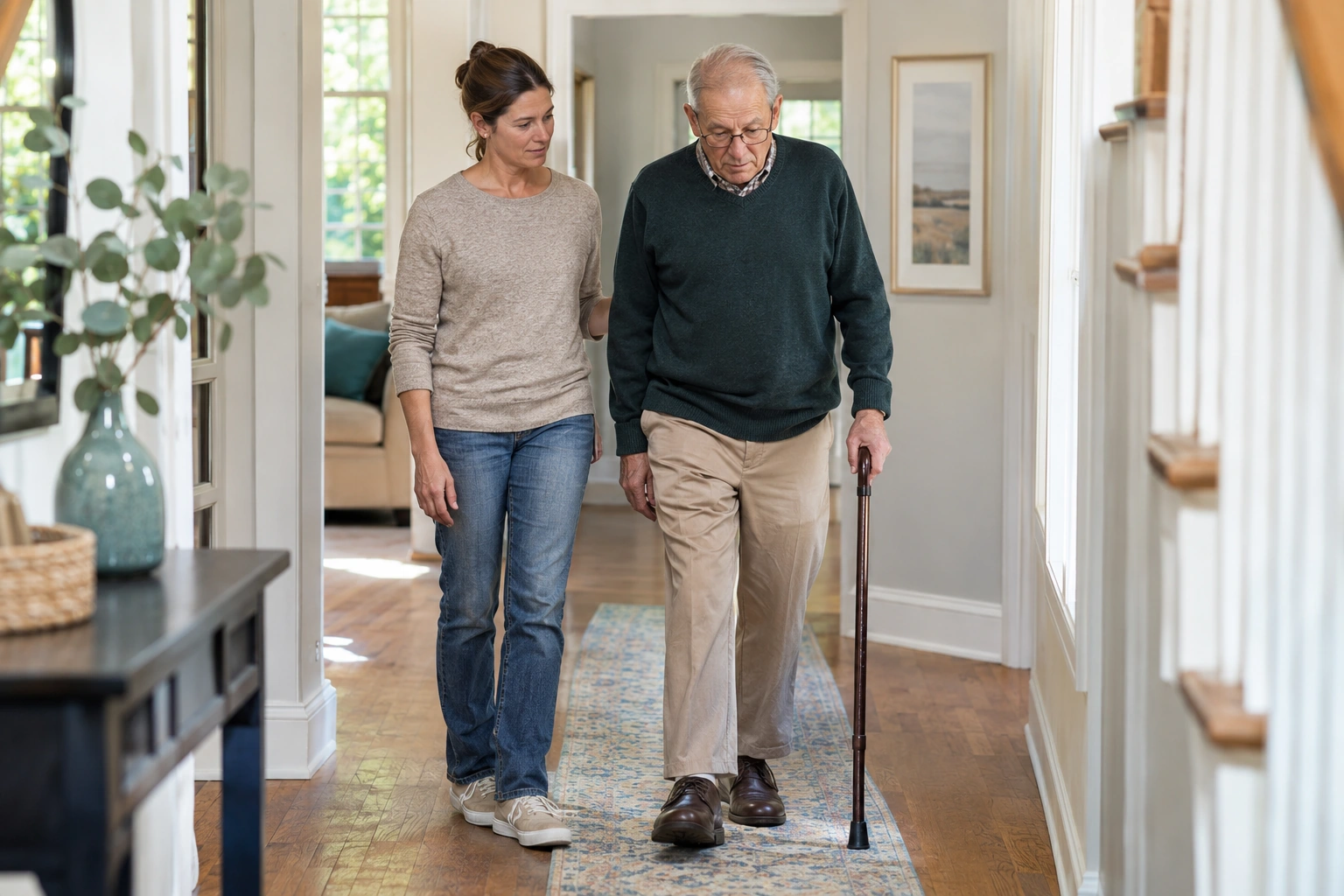
Care with a practical purpose
How physical therapy can help.
Care links balance and walking practice to the situations where you want to feel steadier.
Build a steadier foundation.
Work on strength, mobility, and balance tasks selected around your examination. Practice begins with the support and level of challenge appropriate for you.
Practice the way you need to walk.
Explore steps, turns, starts, and stops, with walking support when needed. Training can reflect your home, usual routes, and everyday movement demands.
Rebuild confidence in everyday situations.
Progress toward curbs, changes in direction, and other meaningful tasks. Your clinician considers safety, current ability, and any need for further assessment.
Your concerns, answered.
A little clarity can make the first step feel easier.
Dr. Arva Gadly may assess your walking pattern, strength, mobility, and ability to balance during different tasks. Your fall history, symptoms, footwear, and any walking aid also help guide a practical plan.
Yes. Tell us what support you use and bring it with you. Your clinician can assess how it fits into your everyday movement and select practice that matches your current ability.
Your plan may also include strength work, walking practice, turns, and task-specific training. Activities are progressed around your needs and safety; no program can guarantee that a fall will not occur.