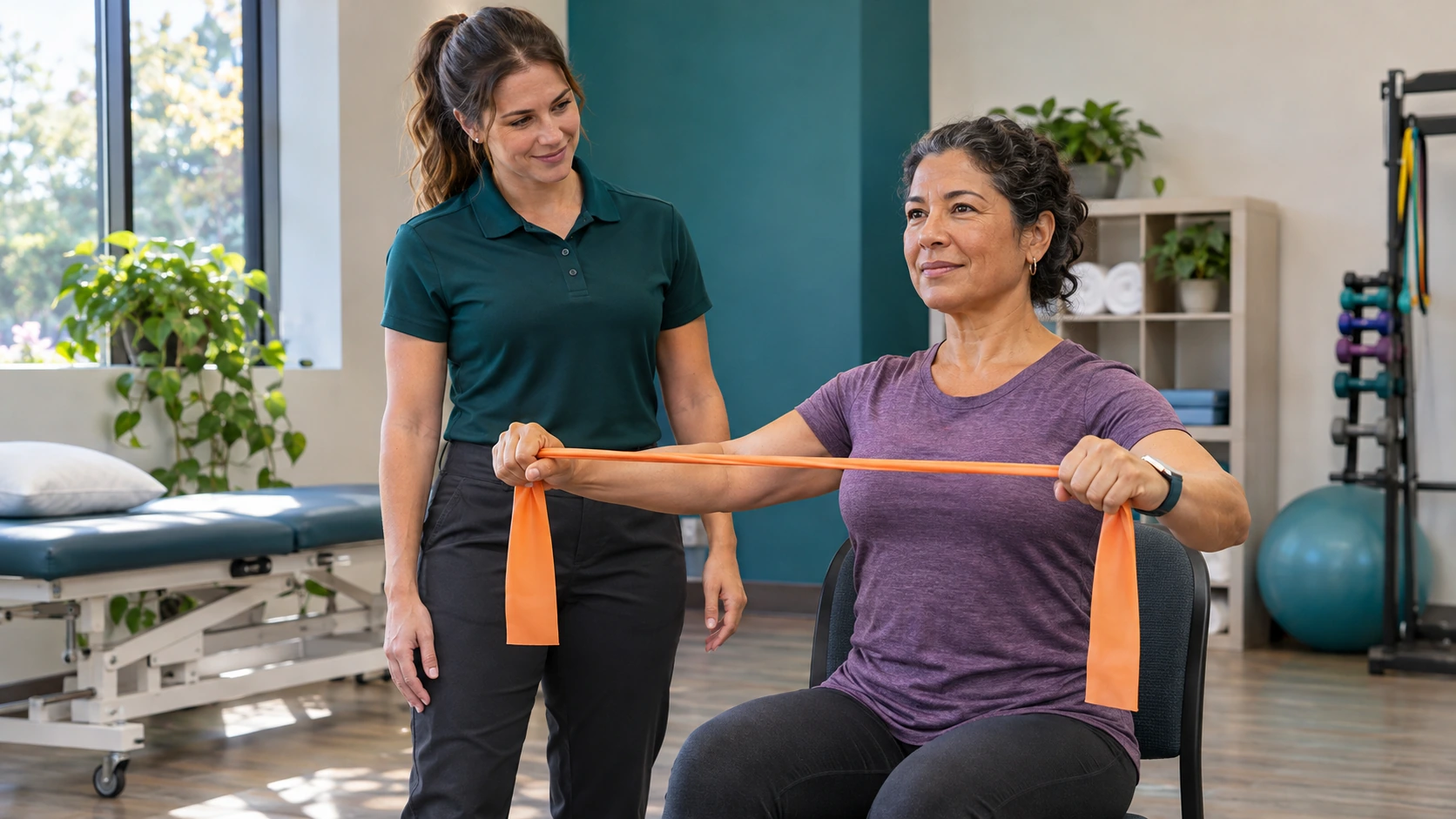
Shoulder Pain
Support for reaching, lifting, and everyday life.
Care for shoulder discomfort and stiffness that affect reaching overhead, carrying, or getting dressed.
Everyday activities matter.
You may notice symptoms during familiar parts of your day, such as:
- Reaching into an overhead cupboard
- Putting on a shirt, jacket, or seat belt
- Washing or styling your hair
- Carrying groceries or lifting a child
- Reaching behind your back to get dressed
- Sleeping comfortably on your side
Understanding your symptoms
What is shoulder pain?
Shoulder pain describes discomfort in or around the joint that helps you reach, lift, and position your arm. It can show up as an ache at rest, a sharp sensation during a particular movement, stiffness, or a feeling that your arm has lost strength.
Symptoms can relate to muscles, tendons, joints, an injury, or another contributing area such as the neck. Pain alone does not tell you which structure is involved. Your evaluation connects the movements that bother you with findings that guide care.

Care with a practical purpose
How physical therapy can help.
Your plan focuses on the reach, strength, and movement confidence your everyday tasks require.
Work toward a more useful reach.
Explore shoulder movement for dressing, washing your hair, and reaching a shelf. Mobility work is selected around the cause of your restriction and any precautions.
Build strength for lifting.
Progress shoulder and surrounding muscle strength for carrying, lifting, and repeated arm use. Exercises begin at a level that matches your current ability.
Return to overhead activity gradually.
Connect rehabilitation with the movements your work, exercise, or recreation requires. Your response and any medical restrictions guide changes in load and repetition.
Your concerns, answered.
A little clarity can make the first step feel easier.
No. Pain can come from different sources, and similar symptoms do not always mean the same injury. Your history and examination help clarify the pattern and whether additional medical assessment is appropriate.
The right balance of activity and recovery depends on your symptoms and any restrictions. Your clinician can help identify manageable movements and modifications rather than assume every task should stop or continue unchanged.
Rehabilitation can be planned around your procedure, healing stage, and surgeon’s instructions. Bring your protocol and restrictions so reaching, strengthening, and daily activity practice follow the appropriate precautions.