Headaches
More room for focus, movement, and the day ahead.
Support when headaches and neck discomfort interrupt work, rest, or the activities you enjoy.
Everyday activities matter.
You may notice symptoms during familiar parts of your day, such as:
- Reading a book or focusing on a computer screen
- Getting through a meeting or a full workday
- Turning your head to check traffic while driving
- Looking down at your phone or paperwork
- Finding a comfortable position for sleep
- Enjoying exercise, family time, or evening plans
Understanding your symptoms
What are headaches?
A headache is pain or discomfort in part of your head. It may feel like pressure, tightness, throbbing, or an ache, and different types of headaches can have very different causes. Some occur alongside neck stiffness or sensitivity around the upper neck and shoulders.
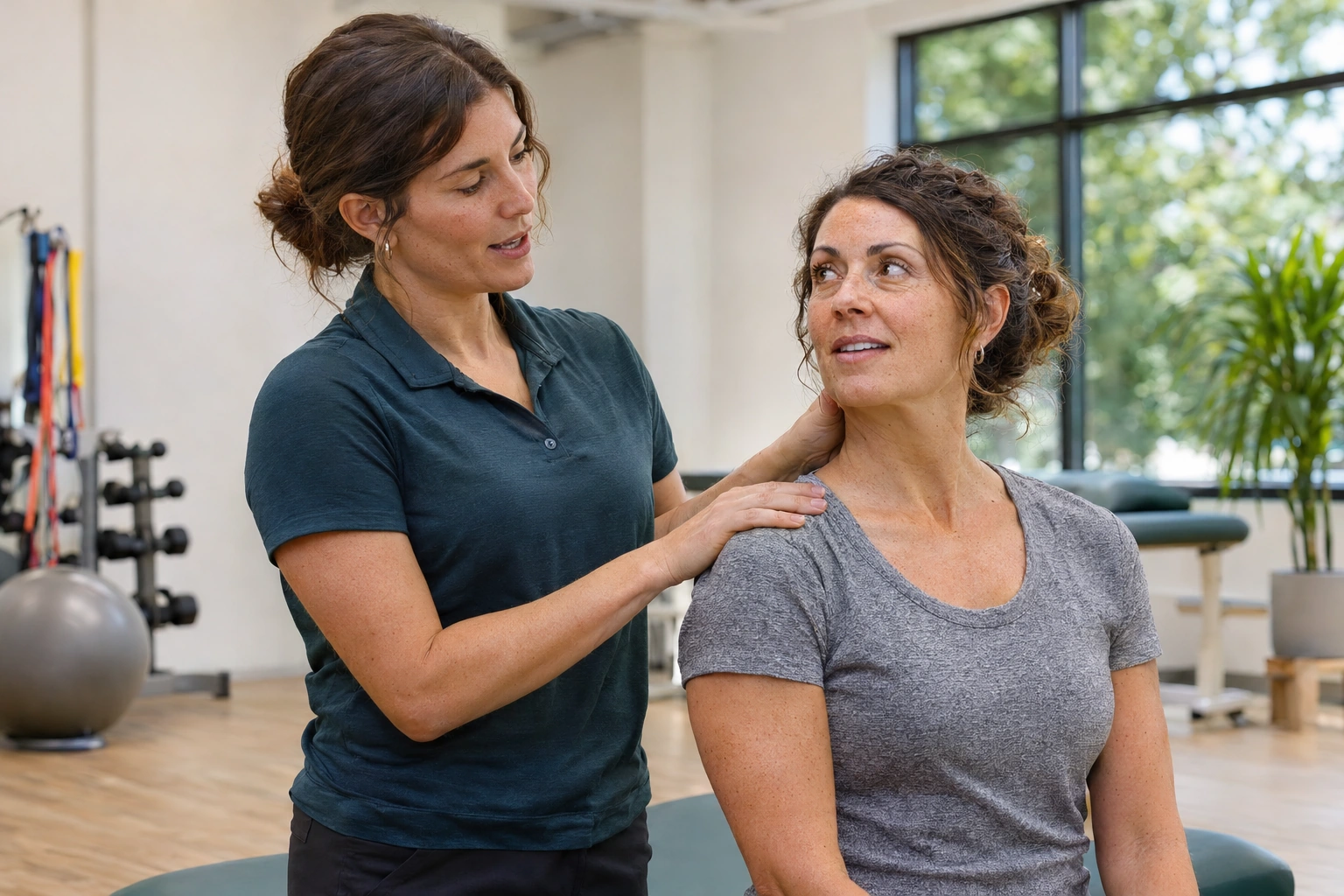
Physical therapy may be appropriate when neck movement, muscles, or joints contribute to your symptoms. Dr. Arva Gadly considers your headache pattern, health history, and movement findings to help determine whether rehabilitation or another medical assessment is the right next step.

Care with a practical purpose
How physical therapy can help.
When neck movement or muscle tension contributes to headaches, care can focus on three practical goals.
Make head movement easier.
Work on comfortable neck mobility so looking around and changing positions feel less restricted. Hands-on care may be included when appropriate.
Build support for longer days.
Develop neck and upper-back strength and endurance to better tolerate daily demands such as sitting, reading, and computer work.
Find strategies that fit your life.
Explore movement breaks, exercise, and practical adjustments to everyday habits. Your plan reflects your symptoms and what you want to get back to.
Your concerns, answered.
A little clarity can make the first step feel easier.
Headaches have many causes. PT may help when neck movement, muscles, or joints contribute to your symptoms. Your history and examination help determine whether rehabilitation, another medical assessment, or a combination of care is appropriate.
Dr. Arva Gadly will ask about your headache pattern, other symptoms, previous care, and what you want to get back to. Your evaluation may include neck movement, strength, and daily movement habits. You will discuss the findings and suitable next steps together.
Share what you have tried and how it helped. PT may complement medical care when movement-related factors contribute to your headaches. Bring a list of medications and any relevant reports so your care can account for the bigger picture.