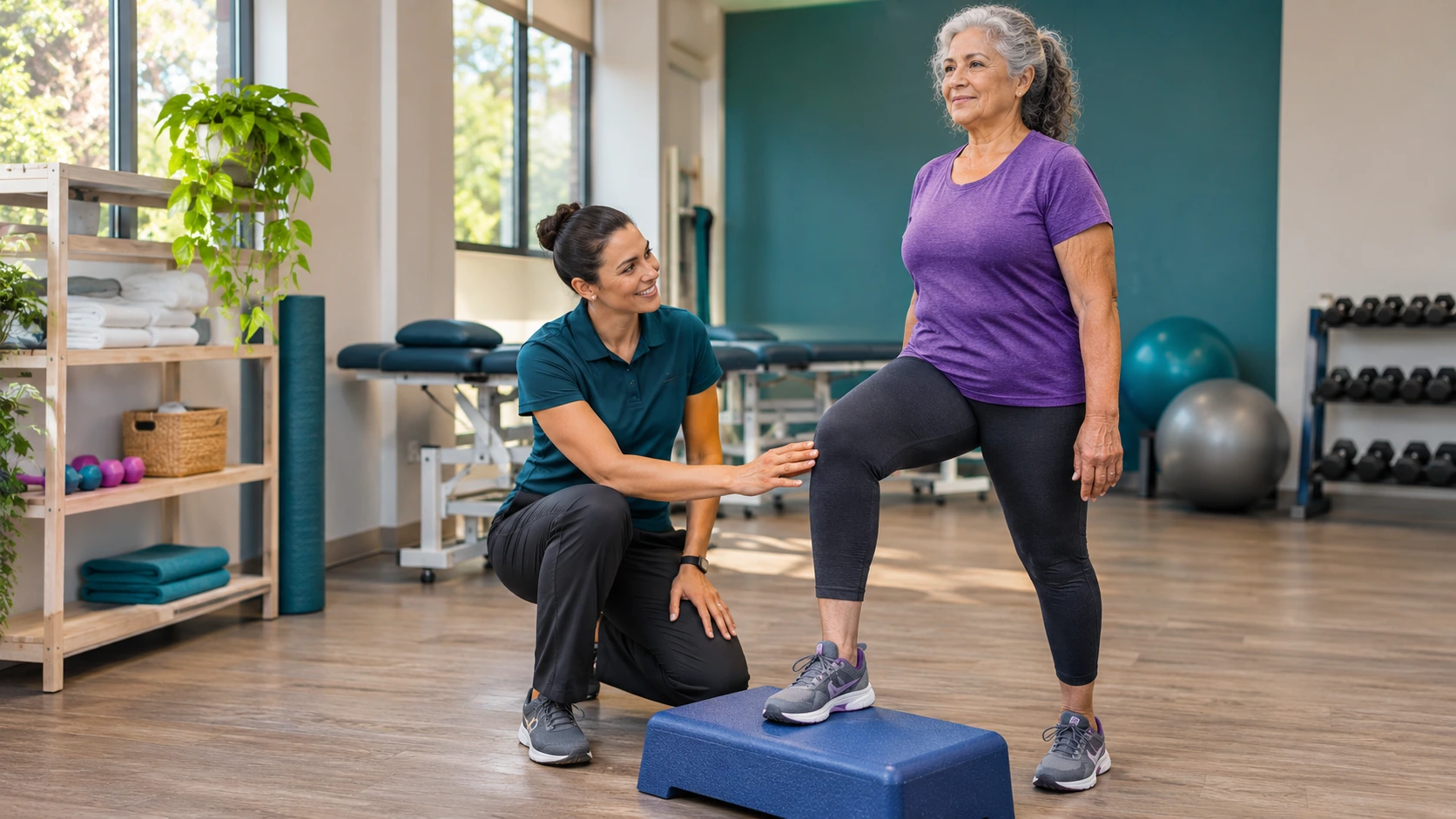
Knee Pain
Build confidence in every step.
Care for knee discomfort and stiffness that affect stairs, squatting, walking, or returning to activity.
Everyday activities matter.
You may notice symptoms during familiar parts of your day, such as:
- Going up or down stairs
- Standing up from a chair or the toilet
- Squatting to reach a low shelf
- Kneeling for housework or gardening
- Walking the dog or shopping for groceries
- Getting into a car or returning to exercise
Understanding your symptoms
What is knee pain?
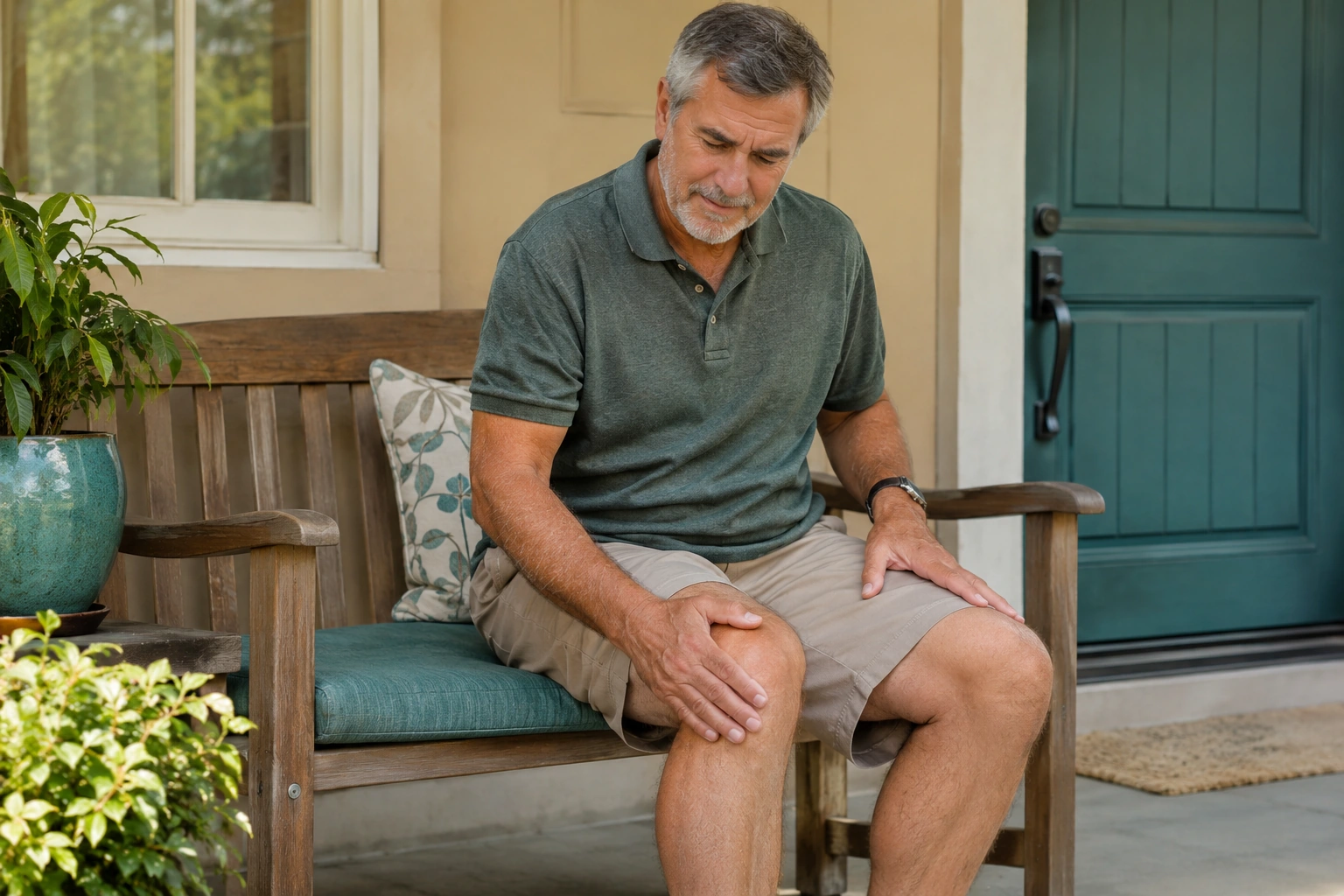
Knee pain may be felt at the front, back, or sides of the joint. Some people notice stiffness after sitting, soreness during stairs, swelling, or a sense that the knee is less dependable. The activities that bring on symptoms can help shape your evaluation.
Pain can follow an injury or build gradually with changes in activity or joint health. Different problems can produce similar symptoms. An assessment considers knee movement, strength, walking, and your goals to guide appropriate rehabilitation or further medical review.
Care with a practical purpose
How physical therapy can help.
Care focuses on the movement, strength, and control you need for steps, chairs, walking, and recreation.
Work toward easier bending and straightening.
Address movement restrictions that affect sitting, dressing, or changing position. Your evaluation helps guide appropriate exercises and hands-on care when suitable.
Build strength for steps and chairs.
Develop leg strength and movement control for rising, lowering, and using stairs. Practice is adjusted to your current ability and response.
Progress toward longer and more active days.
Connect strength and walking practice with your work, errands, and exercise goals. Distance, repetition, and load are increased according to your needs.
Your concerns, answered.
A little clarity can make the first step feel easier.
These tasks can reveal limits in knee movement, leg strength, or control. Your evaluation looks at how you perform them and what brings on symptoms, helping guide suitable practice and strengthening.
No. Different conditions call for different care. An evaluation helps identify relevant movement and strength needs and whether rehabilitation or further medical assessment is appropriate; it cannot promise that surgery will never be needed.
Your procedure and surgeon’s restrictions guide rehabilitation. Bring your protocol so movement, walking, strengthening, and daily task practice can match your healing stage and medical guidance.